

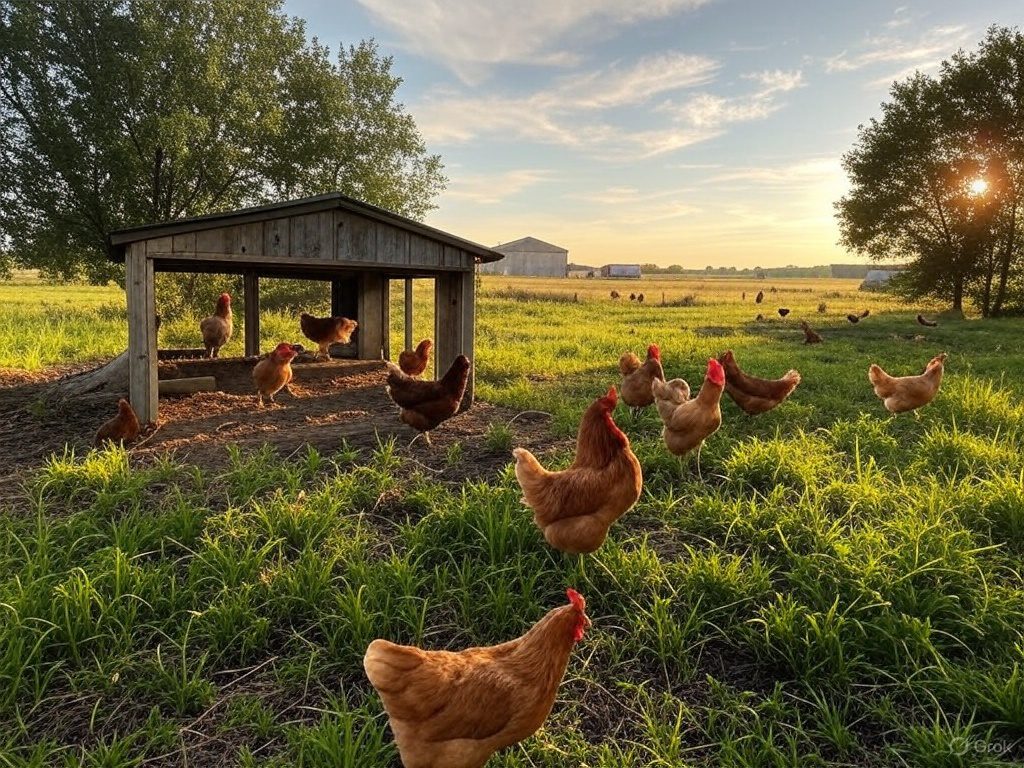
Small-scale chicken farmers are being encouraged to commercialize their operations, a key message supported by the Kenya Agricultural and Livestock Research Organization (KALRO). The organization has introduced various technologies, innovations, and management practices (TIMPS) aimed at enhancing production, improving market access, and optimizing the chicken farming enterprise.
The chicken value chain has attracted numerous traders across the country. Notably, Winnie Cheruiyot, a special needs teacher from Tumbelion village in Kaplong, Bomet County, has found success in this field. Despite her responsibilities at St. Kizito School for the Deaf, where she teaches sign language and other subjects, Cheruiyot pursued her passion for chicken farming.
In 2015, she began her venture with 300 KALRO chicks, raising them to the laying stage. “I was chosen, I was trained, and thereafter, started working with KALRO,” Cheruiyot shared. By February 2021, KALRO identified her as a strategic multiplier to assist in distributing chickens throughout the country, starting her with a batch of 4,000 chicks, and later supplying her with another 4,000.
Ochieng’ Ouko, a research assistant at the Dairy Research Institute (DRI) in Naivasha, explained, “We sought out strategic multipliers to help KALRO distribute the chicken breeds we developed over the years.” The initiative has extended to several counties including Kakamega, Bomet, Laikipia, Uasin Gishu, and Meru.
The training provided by KALRO focuses on essential practices for managing chicken brooding, feeding, vaccination against common diseases, and maintaining proper records, including ideal housing conditions for the birds. KALRO’s livestock experts promote the KALRO Chicken (KC1, 2, and 3) as ideal for both subsistence and commercial farming due to their rapid growth rates.
Dr. Peter Alaru, coordinator of the non-ruminant research program at KALRO, highlighted the advantages of this breed: “The breed begins laying eggs at just four-and-a-half months, while traditional indigenous breeds can take up to eight months. Males typically reach two kilograms in weight within four months.”
Cheruiyot received her first batch of 500 one-day-old KC1 chicks through the Kenya Climate Smart Agricultural Project (KCSAP). Thanks to her adherence to good agricultural practices (GAPs), she experienced minimal chick losses. Ouko noted, “Many farmers face high mortality rates due to poor breeding techniques. With the business model Cheruiyot adopted, we’ve reduced chick mortality from 50 percent to only five percent.”