

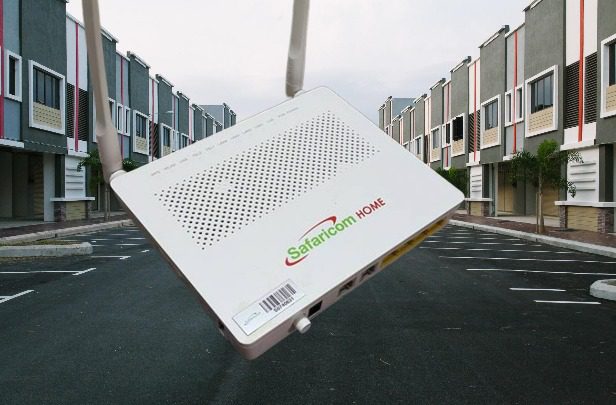
In a move set to redefine internet accessibility in East Africa, Safaricom has announced plans to launch prepaid fixed broadband and tokenised Wi-Fi services, effectively ending the requirement for mandatory monthly subscriptions.
The telecommunications giant aims to roll out the new “pay-as-you-go” options during the second half of its 2026 financial year—between October 2025 and March 2026. The shift is designed to mirror the success of mobile data bundles, allowing users to purchase home and business internet for a day, a week, or a month, depending on their budget and needs.
Currently, fixed internet in Kenya is dominated by monthly billing cycles, a model that often excludes households with irregular incomes, students, and small-scale entrepreneurs. By introducing tokenised Wi-Fi and prepaid fibre, Safaricom is targeting the “sachet economy,” providing flexible, commitment-free access without the burden of long-term contracts.
“The move is designed to make connectivity more flexible and affordable,” the company stated, noting that the model will allow users to connect only when necessary, eliminating wasted costs for periods when the internet is not in use.
While Safaricom currently boasts over 400,000 fixed broadband customers, internal estimates suggest the potential market is nearly ten times larger. The company identified a gap of approximately three million households that remain offline or rely on unregulated, informal Wi-Fi vendors in urban and peri-urban neighborhoods.
Industry analysts suggest that by offering a more reliable and formal alternative to these informal “hotspots,” Safaricom could rapidly consolidate its lead in the fixed-data market.
Safaricom Chief Executive Officer Peter Ndegwa has long signaled that fixed broadband is a primary pillar of the company’s future growth. As mobile voice revenues plateau, the expansion into the digital economy through diversified home services is seen as a critical revenue driver.
“Fixed broadband is a critical growth area and a pillar of Kenya’s digital economy,” Ndegwa has previously noted, emphasizing the need to close the connectivity gap for the millions of Kenyans currently underserved by high-speed fibre.
The introduction of prepaid fibre is expected to trigger a price and flexibility war among local Internet Service Providers (ISPs). Competition in low-income areas is particularly fierce, where many residents favor micro-transactions over large monthly outlays.
If successful, Safaricom’s transition from a utility-style billing model to an on-demand service could mark a turning point in how digital infrastructure is consumed across the region, making high-speed internet a flexible commodity rather than a luxury fixed expense.