
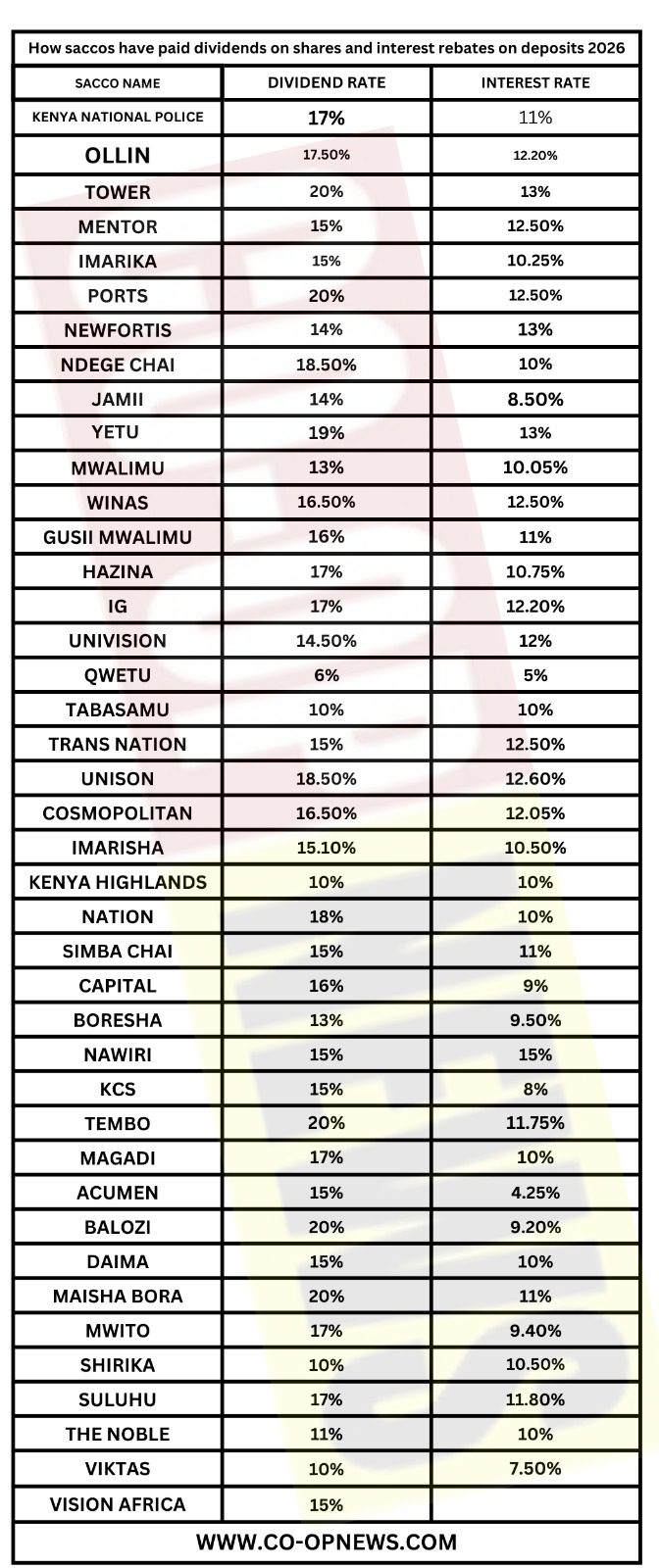
When a SACCO makes a profit at the end of the year, members get a share of that profit in two ways: dividends on shares and rebates on deposits.
Dividends on Shares
A dividend is a payment you receive based on how many shares you own in the SACCO. Here is how it works:
At the end of each financial year, the SACCO adds up all its income — from loan interest, fees, and other sources — then subtracts all its costs, including salaries, administration, loan provisions, taxes, and mandatory reserves. Whatever is left is called the net surplus, and this is what gets shared among members as dividends.
The calculation is straightforward. If you have Ksh 20,000 in share capital and the SACCO declares a dividend rate of 20%, your gross dividend is Ksh 4,000. The government deducts withholding tax — 5% for Kenyan residents — leaving you with a net payment of Ksh 3,800.
Rebates on Deposits
A rebate is the return you earn on the money you have been saving with the SACCO throughout the year. Unlike dividends, rebates are calculated based on how long your money sat in the SACCO. The earlier you deposited, the more you earn, because your money was available for longer. Deposits made very late in the year may earn nothing at all.
For example, if you deposit Ksh 4,000 every month and the rebate rate is 13% per annum, each monthly deposit earns a rebate for the number of months it was held before the year ended.
A Word of Caution
The Ministry of Co-operatives has directed SACCOs to be prudent when declaring dividends and rebates. Payouts must reflect what the SACCO actually earned — not what leadership thinks members want to hear.