

The government has ended a year-long freeze on the registration of new Savings and Credit Cooperative Organisations (SACCOs), but prospective societies will now face significantly steeper requirements before they can operate.
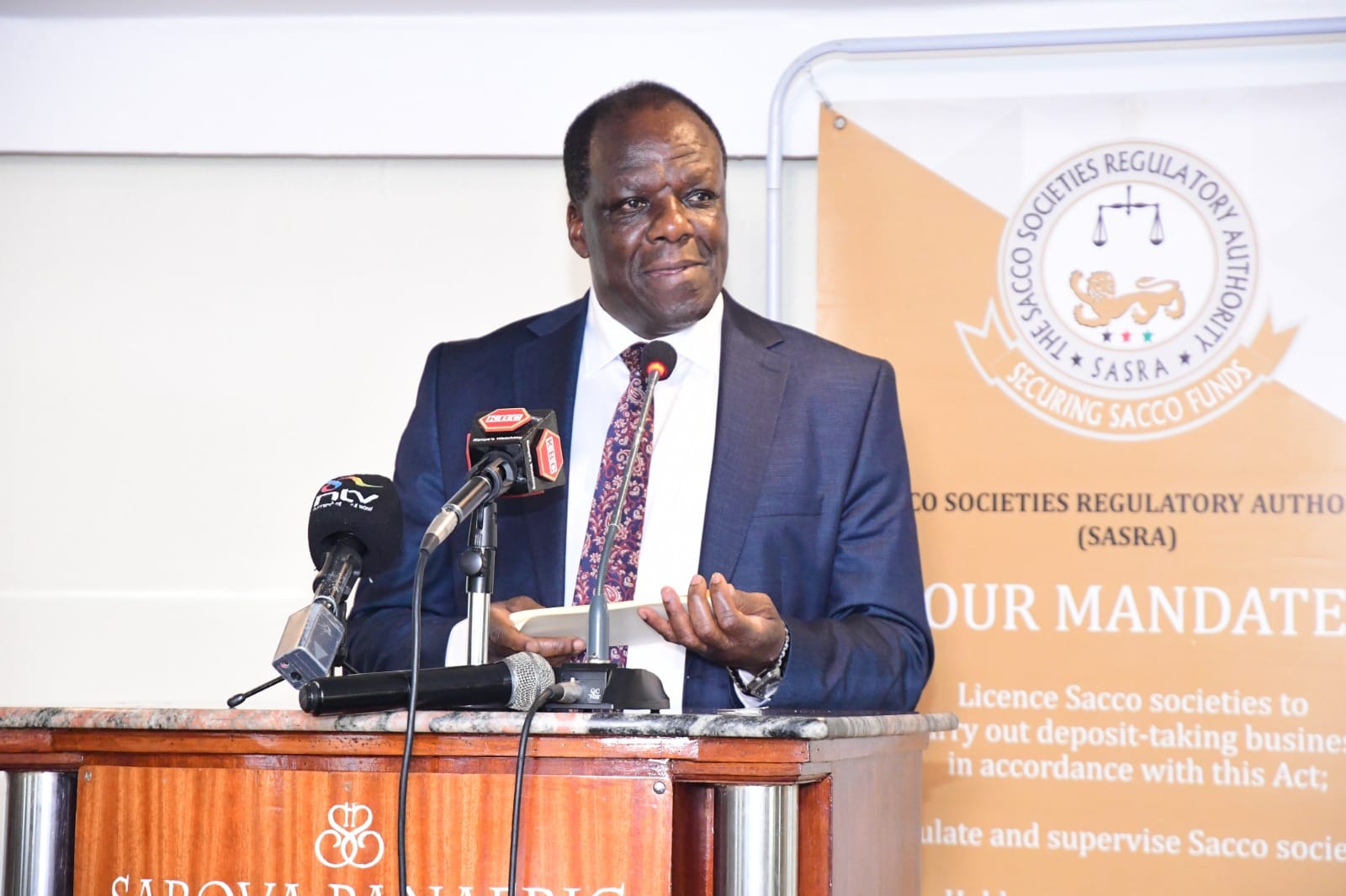
Co-operatives Cabinet Secretary Wycliffe Oparanya announced the lifting of the moratorium with immediate effect, saying the decision follows a comprehensive review of the legislative and regulatory framework governing the sector by a Ministry-appointed Committee of Experts.
Stricter Thresholds for New Entrants
Under the new requirements, applicants must demonstrate institutional capital of at least KSh 1.2 million for formation and initial operations — excluding member deposits — and prove the capacity to mobilise a minimum of KSh 10 million in deposits within the first year.
They must also maintain a fully equipped physical office with at least one employee, submit a three-year business plan with cash flow projections, and comply fully with Sections 4, 5, and 6 of the Co-operative Societies Act. All applications must be channelled through the respective County Director for Co-operatives.
Why the Freeze Was Imposed
The moratorium, first announced in May 2025, was specifically targeted at SACCOs due to their financial intermediation role — collecting public deposits and issuing loans — a function the government deemed too sensitive to leave without tighter oversight.
“Government intervention is necessary to protect these deposits,” Oparanya said at the time, questioning whether the previous threshold of just ten members for SACCO registration was sustainable.
The freeze was extended repeatedly as a Committee of Experts, chaired by Marlene Shiels — CEO of UK-based Capital Credit Union — conducted its review. The committee had recommended the suspension remain in place until a new legal and regulatory framework was enacted.
The expert panel’s findings painted a sobering picture of the sector. Of Kenya’s more than 5,000 SACCOs, a significant number operate at the county level without adequate oversight, creating what the committee described as “unnecessary competition” and high financial risk for members.
The committee presented its Transformation of the SACCO System in Kenya report to President William Ruto at State House, recommending radical restructuring — including a unified oversight architecture that would potentially expand the mandate of the Sacco Societies Regulatory Authority (SASRA) to cover a broader range of institutions.
Cleanup of Existing SACCOs Ongoing
The lifting of the ban does not signal an easing of scrutiny on existing societies. Oparanya confirmed that inactive SACCOs will be de-registered and liquidated by the Commissioner for Co-operatives as provided by law, while viable but non-compliant ones will be compelled to come under SASRA supervision or face the same fate.
The government is also reviewing the Sacco Societies Act of 2008, with the goal of aligning it with digital innovations, global best practices, and emerging financial risks.
“This marks another important step in building stronger, more resilient, and member-driven SACCOs,” Oparanya said, framing the tighter rules as central to Kenya’s financial inclusion and economic transformation agenda.