
No, the Government Is Not Coming for Sacco Savings
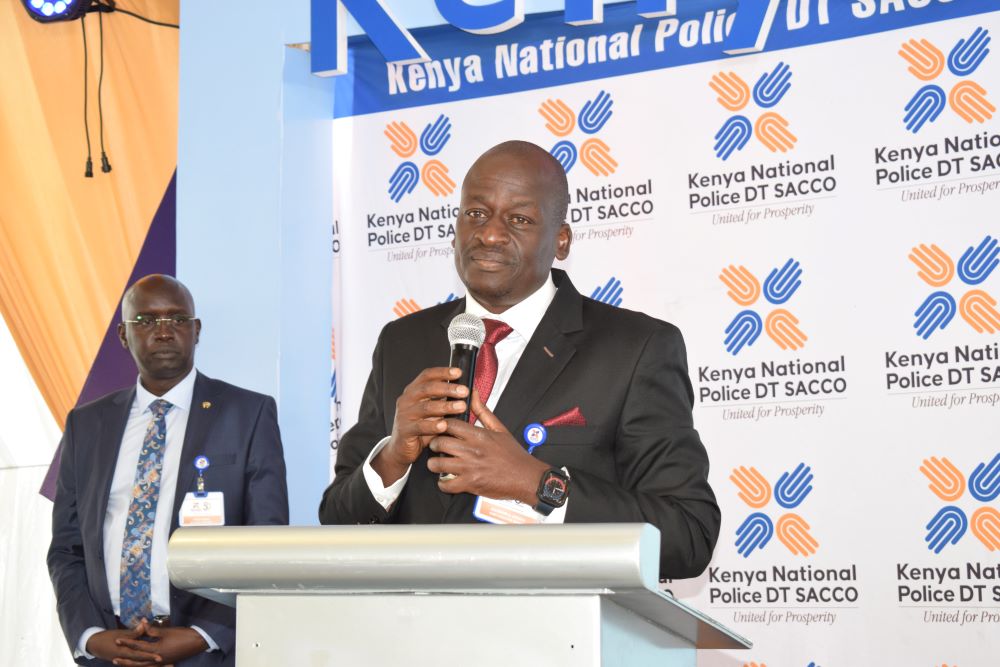
In an interview on Citizen TV’s Daybreak programme, the three Sacco CEOs clarified the new legislation reshaping the cooperative movement. Their conversation opened with a rumour that had rattled the sector recently: speculation that government officials wanted to direct Sacco funds toward financing public development projects, a claim the Ministry of Cooperatives and the National Assembly have denied.
Odhiambo noted that Saccos are member-owned institutions whose investment decisions – including their routine purchases of treasury bills, government bonds, and infrastructure funds -are made by their own boards and members, not dictated from outside.
“We need information that is more factual,” he said, adding that nowhere in the legal framework is government authority over Sacco investment decisions provided for.
Dr. Hassan echoed this, stating that the independence of Saccos is one of the seven core cooperative principles, autonomy, that no external party, government included, can override.
He noted that of the sector’s roughly KSh 1.2 trillion in combined assets, the bulk is already deposits collected from members and loans disbursed back to them, leaving a comparatively modest reserve set aside for long-term growth rather than an idle cash pile available for outside use.
Deposit Guarantee Fund
On the proposed Deposit Guarantee Fund (DGF), designed to give Sacco members the same reassurance bank customers get from the Kenya Deposit Insurance Corporation, the panel said it was a step in the right direction.
“Is the coin in the Sacco as good as the coin in the bank?” Atsiaya asked, adding that it should be, given the roughly KSh 1.2 trillion in member savings the sector now holds.
Under the proposed structure, Saccos would pay a premium into the fund based on their individual risk profile, lower risk, lower premium, with the exact rates to be worked out through consultation within the sector itself rather than imposed from outside.
The CEOs pointed to Ghana, Malawi, and Zambia as African markets that have already adopted similar deposit-protection frameworks.
“A shilling in a bank should be equal to a shilling in a Sacco,” Dr. Hassan said.
No “Super Sacco”
The panel also pushed back on media reports suggesting the reforms would create a single dominant “Super Sacco.” There is no such entity in the bill, Dr. Hassan said. What is proposed instead is a secondary Sacco structure and a Central Liquidity Facility (CLF), modelled on similar arrangements already used by commercial banks, that would let liquidity-rich Saccos lend to cash-strapped ones at favourable rates, rather than forcing smaller Saccos to borrow externally from commercial banks at higher cost.
He cited the U.S. credit union sector’s “CUSO” (credit union service organization) model and Brazil’s shared-platform network as international precedents the Kenyan reforms are drawing on.
Shared Infrastructure
Dr. Hassan disclosed that 93 percent of Stima Sacco’s transactions now happen through mobile channels, with only 7 percent occurring at physical branches, and said building that digital capability alone had required huge investment.
Because smaller Saccos cannot absorb costs on that scale, the reforms propose a shared-services platform that would let Saccos pool resources for core-banking systems, mobile lending, and digital onboarding rather than each building its own infrastructure from scratch.
The panel also noted ongoing discussions with the Nairobi Securities Exchange about creating a mechanism for members to trade share capital without depleting the Sacco’s underlying capital base.
Attracting Younger Members
The CEOs acknowledged a demographic imbalance, with Saccos having an older population, especially in leadership positions.
Atsiaya pointed to Kenya National Police DT Sacco’s introduction of junior accounts, designed to build a savings habit in children long before they reach employment age, as one response aimed at attracting more young people.
Atsiaya and Odhiambo said Saccos are also opening their membership bonds beyond salaried employees to micro-entrepreneurs, small businesses, and self-employed youth, noting that within a single quarter this year, deposit-taking Saccos disbursed more than KSh 115 billion in credit, spanning housing, education, agriculture, and trade.
Addressing claims that the Sacco Societies Amendment Bill was a top-down government imposition, the panel said the legislation, first published in June 2025 and republished in April 2026, has gone through extensive stakeholder mediation before Parliament’s Departmental Committee on Trade and Industry, building on consultations dating back roughly a decade.
The Cooperative Alliance of Kenya, the sector’s apex body, has convened forums for that engagement, and the executives said their own Saccos have kept members informed through ongoing member-education programmes. They encouraged members with concerns to raise them directly through their Saccos’ education sessions, webinars, and public forums as the bill moves through Parliament.