

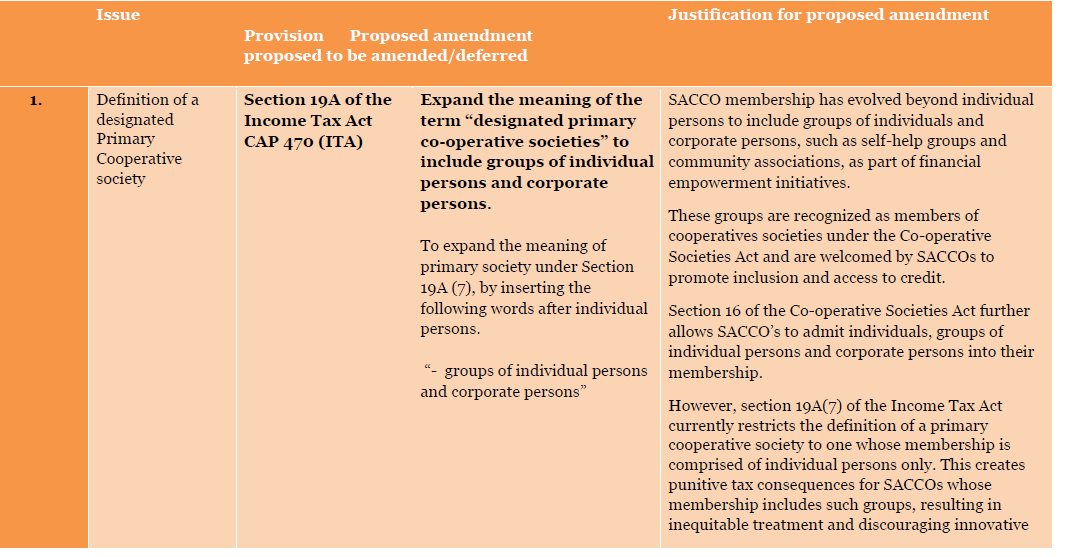
The Kenya Union of Savings and Credit Cooperatives (KUSCCO) has proposed far-reaching tax reforms aimed at protecting SACCO members from rising financial costs and reinforcing the sustainability of Kenya’s cooperative movement.
In submissions to the National Treasury ahead of the 2026 national budget, KUSCCO called for the removal of the 20 percent excise duty levied on loan processing fees and member account maintenance charges. The umbrella body argues that the tax unfairly penalizes members and contradicts the foundational principles governing cooperative societies.
KUSCCO’s proposal is anchored in the doctrine of mutuality, a long-recognized principle in cooperative law and practice. Under this doctrine, SACCOs are owned by their members, who both contribute capital and benefit from services offered. Transactions between a SACCO and its members are therefore considered internal arrangements rather than commercial activities.
“SACCOs function under the doctrine of mutuality, where members pool resources and transact within a cooperative they collectively own,” KUSCCO stated in its submission. The union further noted that imposing excise duty on intramember fees “fractures the identity between contributors and beneficiaries and re-characterizes mutual dealings as a taxable trade, contrary to settled doctrine.”
Industry experts agree that the excise duty has had unintended consequences for cooperative members. According to SACCO practitioners, the tax is often passed on directly to borrowers and account holders, increasing the cost of credit and routine financial services.
“SACCOs exist to offer affordable credit to ordinary Kenyans—teachers, civil servants, farmers, and small traders,” said a senior cooperative governance expert familiar with the sector. “When internal member fees are taxed, that cost inevitably flows back to the member, weakening the SACCO advantage over commercial lenders.”
Data from the Sacco Societies Regulatory Authority (SASRA) highlights the scale of the sector that could be potentially affected by the proposed reforms. According to the latest regulatory updates, regulated SACCOs serve more than 7.3 million members, representing over 13% of Kenya’s population. Collectively, deposit-taking SACCOs control assets running into hundreds of billions of shillings, making the sector a critical pillar of national financial inclusion.
KUSCCO argues that preserving affordability within SACCOs is essential at a time when many households are grappling with high inflation, rising taxation, and increased living costs. The organization warns that continued taxation of internal cooperative fees risks pushing members toward expensive digital lenders and informal borrowing arrangements.
In addition to excise duty relief, KUSCCO has proposed reforms to individual income tax bands. The organization is calling for the widening of tax bands and an increase in the tax-exempt threshold to make the system more progressive and responsive to current economic realities.
According to KUSCCO, wider tax bands would cushion low-income earners, enhance disposable income, and enable members to save and borrow more comfortably through SACCOs. “A progressive tax system strengthens household resilience and directly supports cooperative savings mobilization,” the proposal notes.
Economic analysts have echoed this view, noting that increased disposable income often translates into higher savings and investment at the grassroots level. “SACCOs thrive when members have predictable incomes and room to save,” observed a financial inclusion specialist. “Tax relief at the lower end of the income scale has a multiplier effect across the cooperative ecosystem.”
The proposals come at a time when the SACCO sector is undergoing sweeping reforms aimed at restoring public confidence following a series of governance and financial mismanagement scandals. In response, the government has tightened oversight and introduced new accountability measures.
Among the most notable reforms is the mandatory professional registration and certification of SACCO chief executive officers and senior managers. The move is intended to enhance governance, improve financial stewardship, and ensure that cooperative leaders meet minimum professional and ethical standards.
SASRA has also intensified supervision of deposit-taking SACCOs, with increased emphasis on capital adequacy, liquidity management, and transparency. Sector leaders largely support these measures, acknowledging that stronger governance is essential to protecting members’ savings.
However, cooperative leaders caution that regulatory and tax policies must strike a careful balance. “Governance reforms are necessary and welcome,” said a senior SACCO executive. “But taxation should not undermine the mutual model that distinguishes SACCOs from profit-driven financial institutions.”
KUSCCO has emphasized that recognizing the unique nature of cooperatives is critical to sustaining their contribution to national development. SACCOs continue to play a vital role in financing housing, education, agriculture, and small enterprises—sectors that are central to Kenya’s socio-economic growth.
As budget consultations progress, the tax reform proposals submitted by KUSCCO are expected to inform ongoing dialogue between the National Treasury, lawmakers, and cooperative stakeholders. The outcome of these discussions will shape not only the operating environment for SACCOs but also the financial well-being of millions of Kenyan members.
For the cooperative sector, the debate underscores a broader call for policy alignment—one that harmonizes taxation, regulation, and cooperative principles to support inclusive growth while safeguarding member interests.