

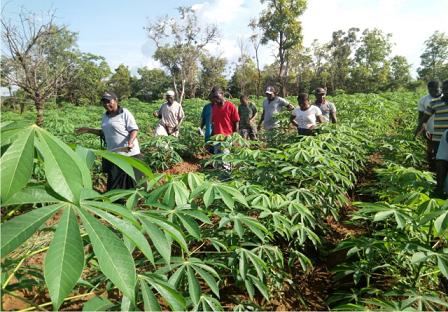
Kenya has reached a landmark milestone in agricultural biotechnology following the successful completion of National Performance Trials (NPTs) for genetically modified (GM) cassava. The crop now awaits final commercialisation, a move the National Biosafety Authority (NBA) says will fundamentally transform the country’s food security landscape.
The new varieties are engineered to combat Cassava Brown Streak Disease (CBSD)—one of East Africa’s most devastating plant viruses. CBSD destroys the edible roots of the plant, often leading to total yield loss. In addition to disease resistance, some varieties have been bred for drought tolerance, a vital trait as climate change continues to destabilize traditional rainfall patterns.
The trials were conducted across diverse ecological zones, including Mtwapa (Kilifi County), Kandara (Murang’a County), and Alupe (Busia County), ahead of a synchronized commercial release in Kenya and Uganda.
A Growing Biotech Portfolio
NBA Acting Director of Technical Services, Josphat Muchiri, noted that the rollout of GM cassava follows a proven trajectory of biotechnology adoption in Kenya. This includes Bt cotton, commercialised in 2020, and Bt maize, which received approval in 2025.
“The logic is consistent across our approvals,” Muchiri explained. “Just as Bt maize resists stalk borers and Bt cotton resists bollworms, this GM cassava is built to withstand CBSD. We are aligning with global trends where biotechnology provides practical solutions to age-old agricultural challenges.”
Kenya’s biotech research ecosystem remains robust, with the NBA overseeing ongoing projects by the Kenya Agricultural and Livestock Research Organisation (KALRO), the International Livestock Research Institute (ILRI), and leading local universities, including Kenyatta and Masinde Muliro.
A Lifeline for the Coast
The approval is particularly significant for Kenya’s coastal region, where cassava serves as a primary staple and a critical insurance policy against hunger. In Kilifi, Kwale, Tana River, and Lamu, smallholder farmers rely on the crop for its ability to thrive in poor soils. However, the rapid spread of CBSD in recent years has decimated harvests, forcing many farmers to abandon the crop.
With disease-resistant varieties now imminent, coastal farmers are poised for a comeback. Beyond household consumption, the new varieties are expected to anchor a more formal “cassava economy.” Reliable yields could spark the growth of value-added industries, including high-quality flour, animal feed, starch, and industrial ethanol—creating much-needed rural jobs.
From Subsistence to Resilience
Agricultural experts believe that embracing improved cassava will help coastal communities diversify away from maize, which is increasingly vulnerable to the region’s recurring droughts.
As the country moves toward the final commercial release, stakeholders are emphasizing the need for robust farmer education and inclusive access to seeds. The goal is to ensure that the benefits of this technology reach the small-scale farmers who need it most.
If successfully deployed, GM cassava could mark the end of the “subsistence” era for the crop, turning a humble root into a sophisticated tool for climate adaptation and economic empowerment.