

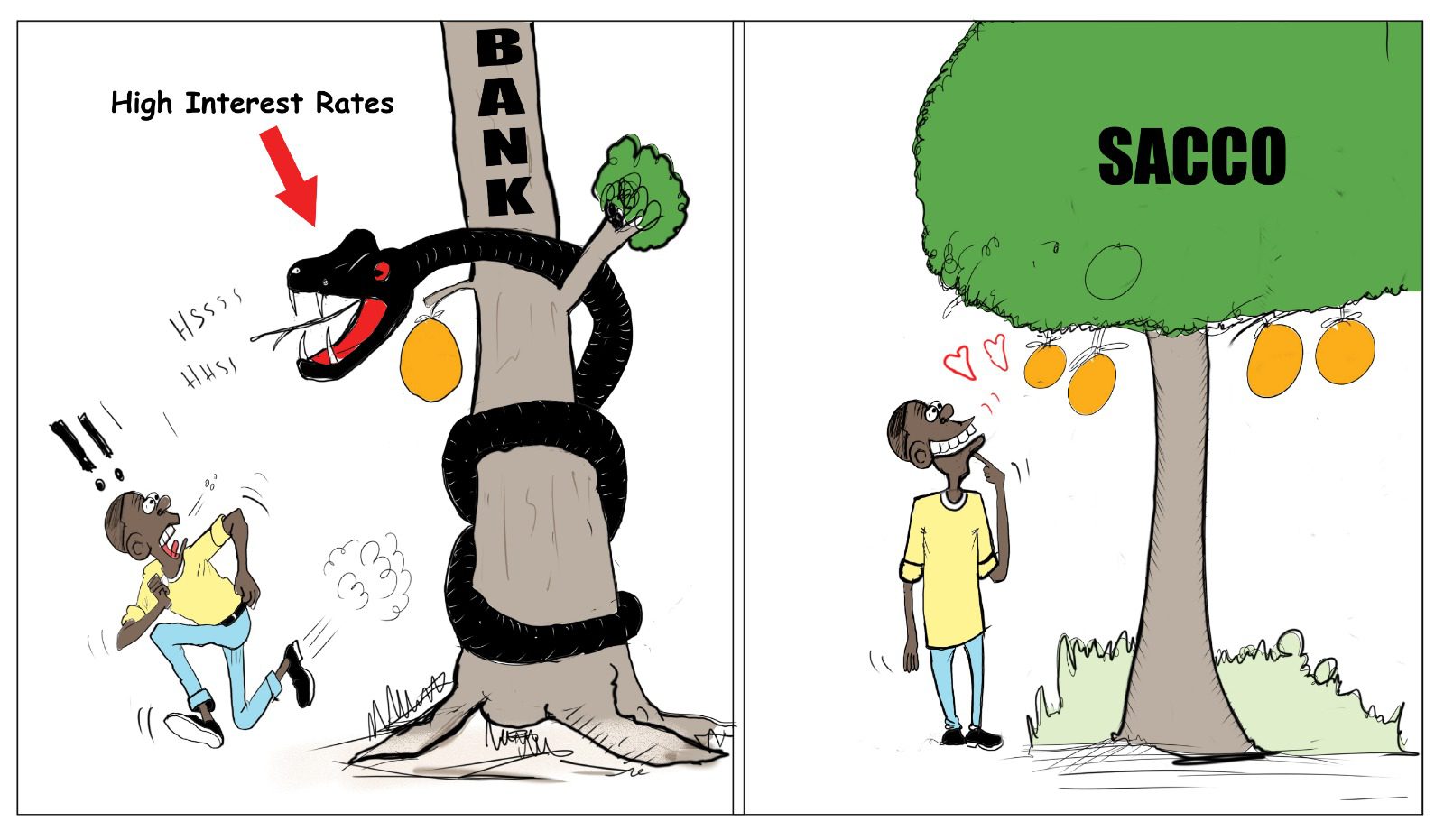
Regulated SACCOs Cut Average Dividends to Strengthen Capital, Maintain Higher Returns Than Banks
Regulated SACCOs reduced the average returns paid to members in 2025, as institutions retained a larger share of their surpluses to strengthen capital buffers and enhance long-term financial resilience, according to the SACCO Supervision Annual Report 2025 released by the Sacco Societies Regulatory Authority (SASRA).
The report shows that the average dividend rate paid on members’ share capital declined to 10.00% in 2025, from 10.46% in 2024. Similarly, the average interest rate paid on members’ deposits fell to 6.72%, from 7.14% over the same period.
SASRA attributed the decline in payouts to the increasing retention of surpluses by regulated SACCOs. The retained funds are being used to strengthen capital bases, improve institutional resilience and support long-term sustainability and stability, while providing a cushion against unforeseen financial risks.
DT-SACCOs maintain higher average returns
The decline in member returns was recorded across both Deposit-Taking (DT-SACCOs) and Non-Deposit-Taking (NWDT-SACCOs).
DT-SACCOs recorded an average dividend rate of 10.21% in 2025, down from 10.54% in 2024. Among NWDT-SACCOs, the average dividend rate declined from 10.37% to 9.76% over the same period.
Despite the decline, DT-SACCOs continued to offer higher average dividends than NWDT-SACCOs.
A similar trend was recorded in interest paid on members’ deposits. DT-SACCOs saw their average rate decline from 7.14% in 2024 to 7.02% in 2025, while NWDT-SACCOs recorded a sharper decline from 7.14% to 6.41%.
DT-SACCOs consequently maintained higher average deposit interest rates than their NWDT counterparts.
According to SASRA, the relatively higher returns offered by DT-SACCOs may be linked to their stronger financial performance, larger asset bases and greater operational efficiency. Their diversified income streams, including revenue generated through Front Office Service Activities (FOSA), and higher deposit volumes also enhance their ability to generate surpluses while maintaining adequate capital and liquidity buffers.
NWDT-SACCOs, by comparison, largely depend on lending as their primary business activity, limiting the diversity of their income streams.
Regulated SACCOs Cut Average Dividends to Strengthen Capital, Maintain Higher Returns Than Banks
SACCO returns remain competitive with commercial banks
SASRA’s analysis also compares member returns from regulated SACCOs with key indicators in the banking sector, including the Central Bank Rate (CBR), average commercial bank lending rates and average interest rates paid by commercial banks on customers’ deposits.
The report shows that, on average, regulated SACCOs paid higher returns than commercial banks on customer deposits. The difference stood at approximately 6.36 percentage points for dividends and 3.08 percentage points for interest on deposits.
The findings highlight the relatively competitive returns available to members through regulated SACCOs, while also showing that the average rates declared by SACCOs were below the CBR during the period under review.
The report’s findings point to a balancing act within the regulated SACCO sector: institutions are moderating member payouts while retaining more surplus to strengthen their financial foundations and support long-term sustainability.