

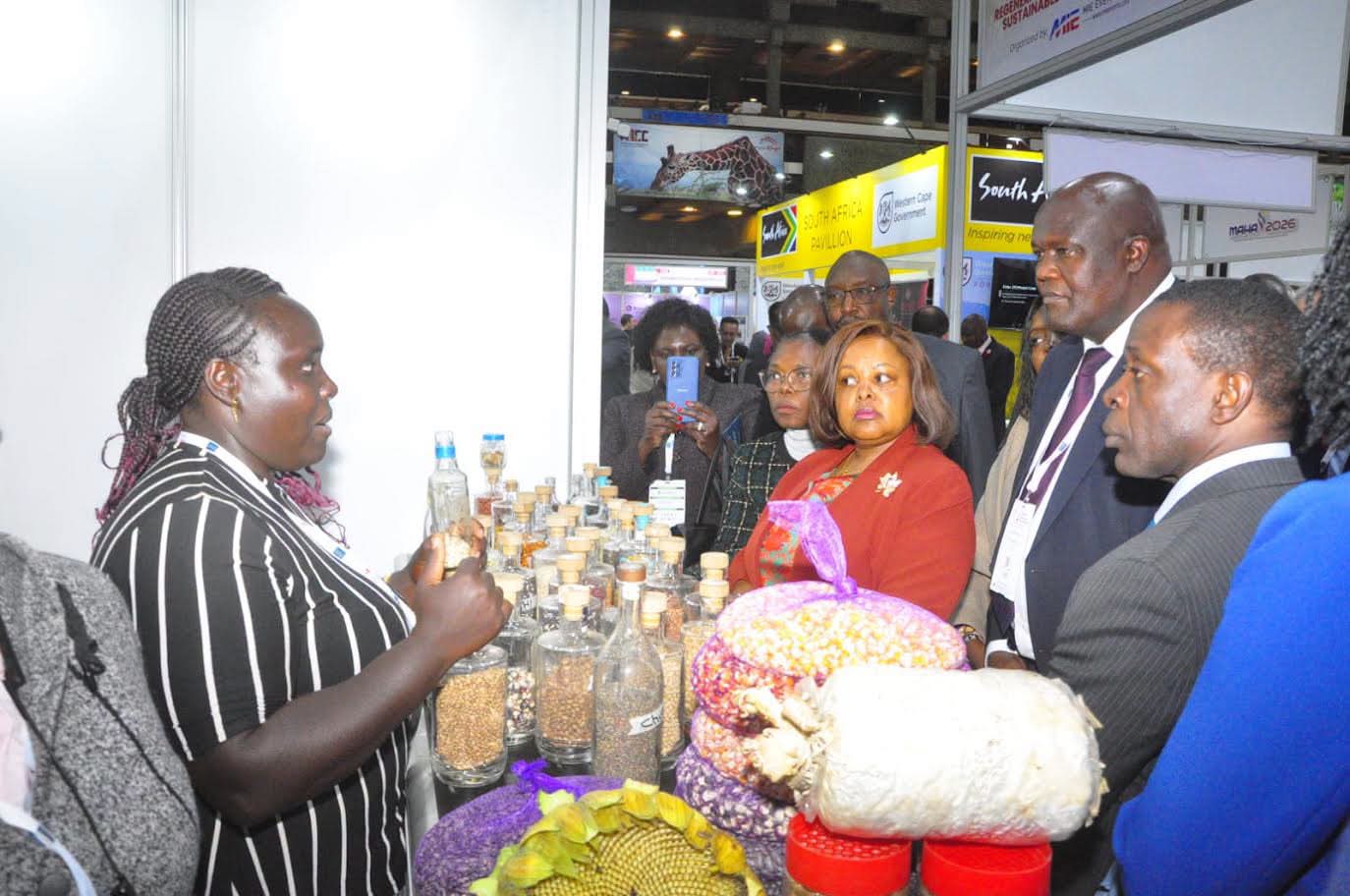
Food safety, affordable nutrition and stronger coordination across Kenya’s agricultural and livestock sectors are essential to ensuring citizens have access to healthy diets, government officials and development partners said this week.
Speaking at the Africa Food Show 2026 Conference at the Kenya International Convention Centre (KICC) in Nairobi, officials called for a food-systems approach spanning the entire chain — from production and livestock keeping to processing, marketing and consumption.
The three-day conference, themed “Transforming Agrifood Systems for Healthy Diets: From Seed to Plate,” drew government officials, agriculture and livestock stakeholders, development partners and UN representatives.
Secretary to the Cabinet Mercy Wanjau said agriculture can no longer be treated as an isolated sector, since decisions on irrigation, trade and production directly affect nutrition and affordability.
“A decision on irrigation is also a decision on nutrition,” Wanjau said, citing government initiatives such as the Galana-Kulalu Food Security Project, the Mama Kitchen Garden Programme and the Kenya Integrated Agricultural Management Information System (KIAMIS).
Principal Secretary for Agriculture Dr Kipronoh Ronoh said Kenya is strengthening food safety through the newly enacted Food and Feed Safety Control Coordination Act and the establishment of the Office of the Food and Feed Safety Controller, reforms he said would address fragmentation in food-control systems, protect consumers and support safe trade.
Ronoh said 7.6 million farmers have been registered through KIAMIS, 1.37 million benefited from e-vouchers in the 2025/26 financial year, and 20.7 million livestock have been vaccinated through the digital platform.
PS for Livestock Development Jonathan Mueke said livestock must be incorporated into food and nutrition policies, warning that unsafe animal feed can introduce hazards into the food chain. He called for greater recognition of indigenous knowledge among pastoralist communities and stronger support for smallholder farmers, women traders and youth innovators.
FAO Representative in Kenya Farayi Zimudzi said nutrition advice alone cannot guarantee healthy diets if food is unsafe, unaffordable or inaccessible, citing studies that found pesticide residues above recommended limits in vegetables sampled from Nairobi and Nakuru markets.
“A diet must be safe to be healthy,” Zimudzi said, urging stakeholders to link interventions across the food chain, from soil health and production to processing and consumption.
Officials agreed that improving Kenya’s diets will require coordinated action to ensure food is safe, diverse, nutritious and affordable, from seed to plate.