
As you approach the shop, the tempting aroma of fried fish fills the air. Your eyes catch sight of golden, marinated fish, beautifully displayed behind a glass case. You step closer, and a warm voice greets you, “Karibu mteja, tukuuzie samaki yupi?” You turn and meet the smiling face of a woman. You can’t help but smile back.
Inside the shop, three more women are busy at work. They handle frozen fish, clean and sort them, and wrap them in special bags. Curiosity gets the best of you, and you ask, “Kwani munauza samaki wabichi?”
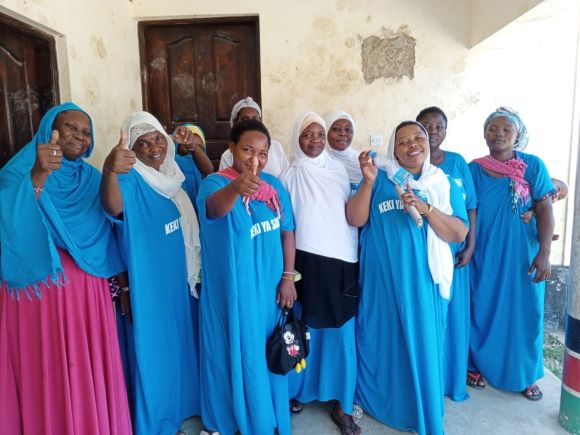
Welcome to Lengo Moja Seafood, an emerging seafood hub in Mto Panga, Mombasa. This shop is not just a business; it’s the creation of the Lengo Moja self-help group. Formed as a women’s merry-go-round in 2021, they united with a shared mission: to escape poverty.
“We joined forces as women in the community,” explains Lillian Ngila, the group’s chairlady. “Through unity and contributions, we aimed to harness our collective power.” Their journey took a turn during the 2024 Mombasa show, where they showcased a unique fish cake. This invention captured the attention of Kenya Marine Fisheries and Social Economic Development (KEMSFED), leading to their inclusion in an empowerment project.
Earlier this year, KEMSFED provided funding to realize their dream of a seafood business. This support allowed them to rent a space, acquire refrigeration, and stock their shop. Since opening, Lengo Moja Seafood has seen impressive growth.
“We view the fish business as a promising venture,” Ngila says. “What we earn helps feed our families and support our children’s education. The struggle remains, but it’s not as intense as before.” The group comprises dedicated women working harmoniously towards financial stability for their families. They organize themselves into teams of three, each taking turns running the shop.
As part of the food industry, they strictly follow health protocols. All members are vaccinated, and hygiene is paramount—from personal care to the cleanliness of the shop. Ngila explains, “These standards attract more customers.” They price their products strategically, catering to both individual consumers and retailers.
Their shop features a variety of fish, including Tafi (Rabbitfish), Changu (Red Snapper), Karanga (Parrot fish), Kichungi (Mullet fish), Mkizi (Kingfish), Pweza (Octopus), Una (Eel), Papa (Shark), and Kamba (Prawn). The group sources their fish from Lamu, where prices are lower. However, supply fluctuates due to marine conditions, presenting a challenge they’ve learned to navigate.
Another hurdle is electricity outages. These can threaten the freshness of their stock. To combat this, they have received a generator, soon to be installed.
Through this project, the women have gained invaluable skills. They’ve learned about cooperation, persistence, and the importance of food hygiene. “We’ve become familiar with machines we never knew how to operate before, like meat cutters and digital scales,” Ngila adds, glancing at her fellow shopkeepers with pride. Each lesson contributes to their empowerment and growth as women.