

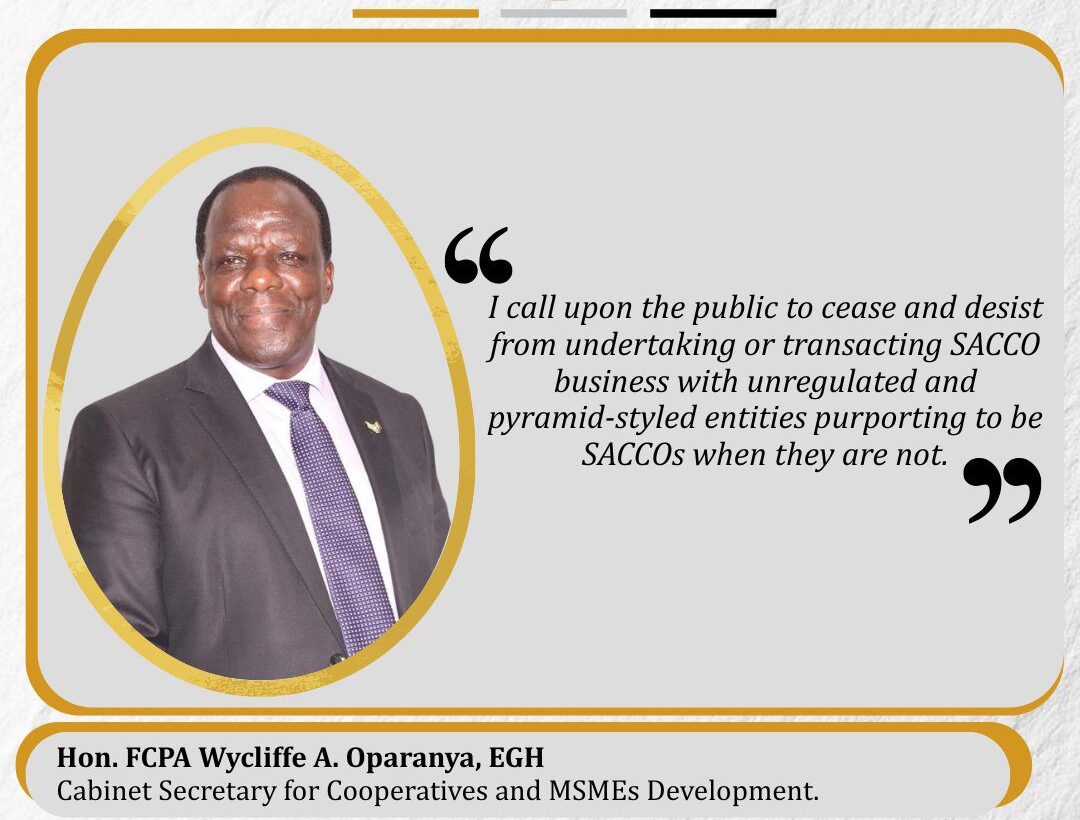
The government has prohibited all Savings and Credit Cooperative Societies (SACCOs) from engaging in investments outside their core functions until proper regulations and oversight are put in place. This decision comes amid rising concerns about financial mismanagement and instability within the SACCO sector, where some cooperatives have encountered severe financial difficulties due to unregulated activities.
During a Senate session, Wycliffe Oparanya, the Cabinet Secretary for Cooperatives and MSMEs Development, disclosed this ban. He pointed out that audits conducted by his ministry revealed extensive involvement of SACCOs in activities unrelated to their primary purpose of mobilizing savings and providing loans. These risky ventures have been identified as contributing factors to the financial troubles faced by many SACCOs nationwide.
Several SACCOs are currently under scrutiny due to reported liquidity problems. Oparanya implicated delays or failures by some employers, particularly county governments, in remitting statutory deductions from employee salaries, which have affected the ability of these SACCOs to meet member requests for savings and loans. This situation has led to financial strain and member dissatisfaction.
The CS ruled out the possibility of government bailouts for struggling SACCOs, citing budget constraints. Instead, he recommended that these distressed cooperatives consider liquidating their assets to repay members and regain financial stability. Emphasizing accountability, he stated that the government cannot be held responsible for poor investment choices and mismanagement by SACCO boards and management.
Oparanya also addressed the operational challenges faced by the Sacco Societies Regulatory Authority (SASRA), the body tasked with overseeing SACCO operations. He noted that SASRA’s effectiveness is compromised by inadequate funding, as many of the levies collected from SACCOs for regulatory purposes are redirected to the National Treasury rather than allocated to SASRA. This funding shortfall has severely restricted the authority’s capacity to manage complex and urgent crises within the SACCO sector.