

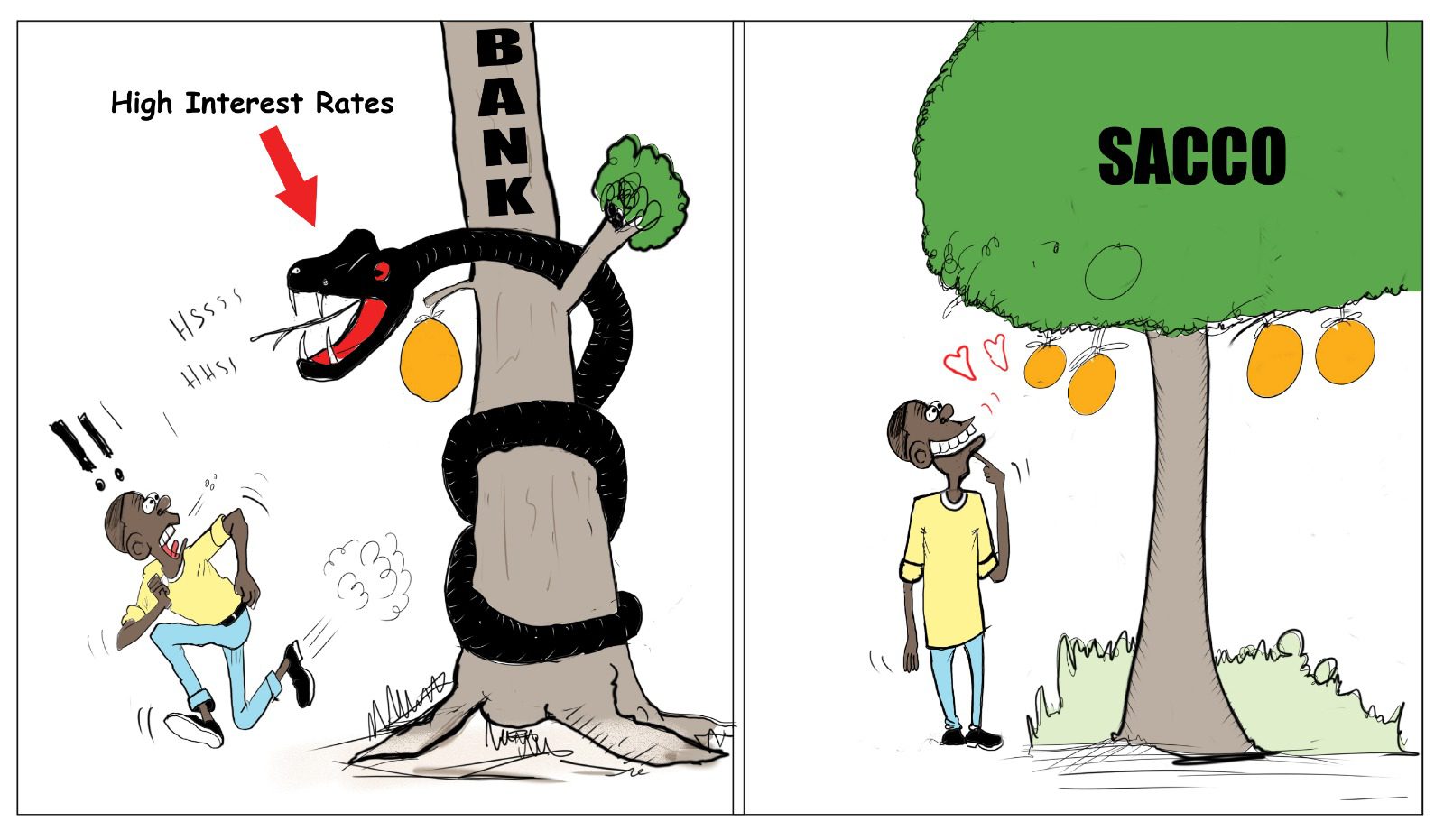
What Sacco Members Value Most
A recent remark by David Obonyo, Commissioner for Cooperatives Development, has sparked a lively debate among Sacco members about what truly defines the success of a cooperative society.
Obonyo argued that Saccos should not be judged primarily by the size of dividends and rebates they pay out to members. Instead, he suggested that the real value of a cooperative lies in how affordable and accessible its loans are to members.
According to the Commissioner, pursuing high dividends can sometimes mask a deeper problem: expensive loan products.
“If members are paying high interest rates on loans simply to finance attractive dividends and rebates, then the cooperative model is being misunderstood,” he noted, emphasizing that Saccos should be evaluated by how much financial relief they provide to their members through affordable credit.
“Saccos are not formed primarily for dividends,” Obonyo said. “We join Saccos to create a pool of resources so we can access affordable credit to enhance our economic well-being. The dividends you receive at the end of the year are secondary to the value of a loan accessed at one percent interest per month to grow your business.”
He noted that the pressure to declare high dividends has, in some cases, negatively impacted cash flows, threatening to take the industry back to the struggles of two decades ago.
“Let us not return to the days when Saccos would stop issuing loans in January, February, and March just to pay out dividends. We have matured beyond that,” he said.
His remarks quickly triggered a wave of reactions from Sacco members, reflecting the complex expectations that members bring into cooperative societies.
Investors vs Borrowers
For some members, the Commissioner’s position raised concerns about the role of returns in motivating investment.
One member, Charles Kigunda, questioned whether downplaying dividends could discourage members who view Saccos as investment vehicles. He pointed out that members’ capital shares are used to fund loans, arguing that investors must see tangible returns if they are to keep their money in the cooperative movement.
Another member, Eddy Maina, echoed this sentiment, suggesting that Sacco membership often consists of two groups: those with large savings who expect dividends, and those with moderate savings who primarily seek loans. In his view, both groups contribute to the Sacco’s sustainability, and ignoring either side could destabilize the institution.
Similarly, Harrison Ngari emphasized that attracting deposits requires incentives. Without competitive returns, he argued, Saccos could struggle to mobilize funds needed to expand their loan portfolios.
Yet several members agreed with the Commissioner that the cooperative movement must refocus on its founding principles.
Christopher Miniga said Saccos should prioritize member welfare, particularly through accessible loans and reasonable interest rates, rather than operating like profit-driven trading entities.
Anthony Njiru struck a middle ground, arguing that Saccos should pursue both goals simultaneously: affordable credit for borrowers and fair returns for savers.
“It is about balance,” he suggested, noting that members expect both financial services and financial rewards from their participation in cooperatives.
Ranking Saccos
Some contributors proposed structural reforms to how Saccos’ performance is evaluated.
Charles Mugo suggested the creation of a comprehensive ranking index that would assess Saccos on multiple indicators beyond dividends and rebates. Such an index, he argued, could include member service value, governance quality, impact on members’ socio-economic empowerment, and broader financial performance indicators.
This, he believes, would provide a more comprehensive picture of how well Saccos serve their members.
But generally speaking, ranking Sacco is a difficult issue. Each Sacco has its own dynamic and membership base that is distinct from the others.
Others highlighted governance and transparency issues within some Saccos.
Irine Iryn raised concerns about the sustainability of consistently high dividends, urging members to scrutinize financial statements to understand how profits are generated.
Meanwhile, Jona Chirchir shared frustration over internal practices that affect member finances. He cited a case where his dividends were automatically converted into share capital without his consent—something he plans to formally contest.
Lucylin Lucy, another contributor, suggested that regulatory authorities should step in where Saccos drift from their core mission. She argued that merely advising members may not be sufficient if some institutions have already shifted their focus toward aggressive profit-driven strategies.
The debate highlights a broader question facing the cooperative movement: are Saccos primarily financial cooperatives designed to offer affordable credit, or are they investment platforms where members expect strong financial returns?
In reality, many Saccos have evolved to serve both roles.
As the sector continues to grow and attract new members, the challenge for regulators and Sacco leadership may lie in maintaining the delicate balance between member welfare and financial sustainability.
For members themselves, the conversation raises an important question: When choosing a Sacco, should the first question be about dividends—or about how affordable the loans truly are?
“Ranking SACCOs purely on dividends and rebates should be discouraged. The real value of a SACCO lies in how affordable and accessible its loans are to members. It is more prudent for members to access low-cost credit than to chase high dividends that are effectively funded by higher loan interest. Paying expensive loan rates just to earn higher rebates and dividends defeats the core cooperative purpose. Going forward, SACCOs should be evaluated based on the affordability of their loan products and the tangible financial relief they provide to members.”
— Mr David Obonyo, Commissioner for Cooperatives Development