

The numbers that forced KUSCCO into liquidation.
The interim board and new management of the Kenya Union of Savings and Credit Co-operatives (KUSCCO) inherited a deeply distressed institution. A reconstruction of its accounts has revealed billions of shillings in losses and significant gaps between the union’s previously reported financial results and its underlying financial position.
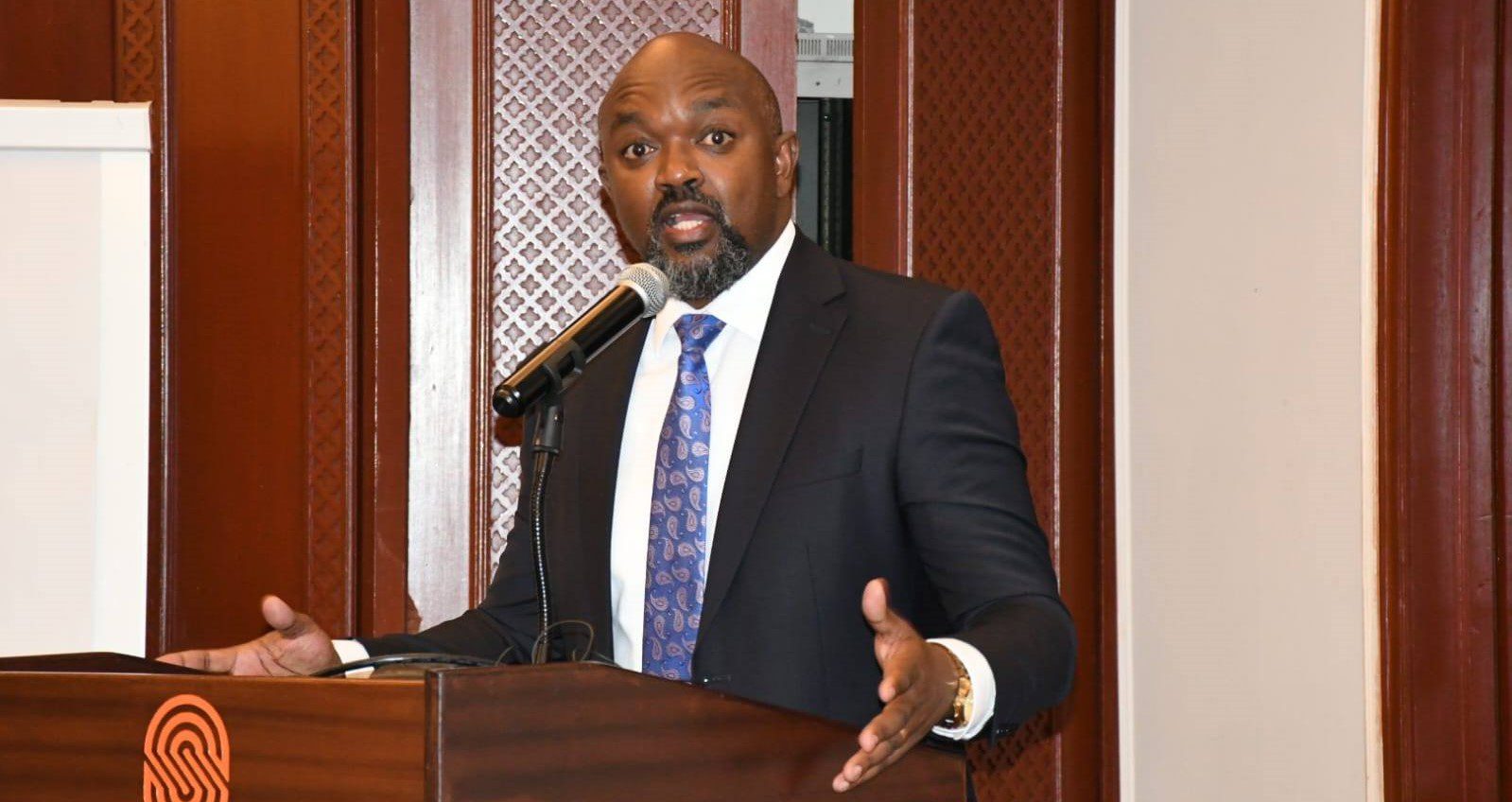
KUSCCO Group Managing Director and CEO Arnold Munene gave the account during a special general meeting of union stakeholders held in Nairobi, taking members through the organisation’s financial position, assets, liabilities, operational restructuring, and efforts to recover funds.
KUSCCO was established in 1973 as the apex organisation for SACCOs in Kenya. Its original mandate centred on advocacy, education and training, research, and consultancy. Over the years, however, the organisation expanded into financial services, housing, and insurance.
According to Munene, this expansion contributed to what he described as institutional drift, alongside weaknesses in governance and oversight, operational inefficiencies, staffing challenges, and capital-intensive housing projects. He said an inspection by the Commissioner for Cooperative Development’s office, which began in September 2023, was followed by major changes in management and leadership from 2024.
“The institutional crisis had several root causes,” Munene told stakeholders, citing institutional drift, governance and oversight weaknesses, limited oversight, challenges in implementing and reporting findings, capital-intensive housing projects, funding challenges, staffing issues, and operational inefficiencies.
Billions in losses uncovered
The new management inherited a negative balance of Ksh301 million, alongside outstanding activities and obligations estimated at Ksh124.6 million.
A transition board was subsequently established with a mandate to develop and implement a recovery strategy, audit the accounts, oversee strategic reporting, and amend the organisation’s legal instruments to accommodate recommendations arising from the recovery process.
The reconstruction of KUSCCO’s loan book also exposed significant discrepancies in previously reported figures. Munene said the reconstruction, undertaken by PRC, established that the loan book had been overstated.
The reconstructed accounts revealed a stark difference between reported profits and the financial position subsequently established. In 2018, KUSCCO had reported a profit of Ksh1.7 billion, while reconstruction of the accounts showed a loss of Ksh7.8 billion. In 2019, a reported profit of Ksh1.4 billion was contrasted with a reconstructed loss of Ksh4 billion. In 2020, the union reported a profit of Ksh1.2 billion against a reconstructed loss of Ksh2.1 billion. In 2021, a reported profit of Ksh139 million was contrasted with a reconstructed loss of Ksh3.2 billion.
“Losses after losses,” Munene told the meeting, putting the cumulative losses revealed through the reconstruction at approximately Ksh16 billion.
The disclosures raise significant questions over the union’s financial reporting practices during the period under review, particularly because SACCOs continued receiving dividends from KUSCCO during some of these years.
Heavy liabilities
Munene listed several assets held by the union, including approximately Ksh1.3 billion in the Central Finance Fund (CFF), Ksh1.8 billion in the KUSCCO Housing Fund, Ksh603.5 million in Kitengela Homes, Ksh105.9 million in other assets, and Ksh48.2 million in cash and cash equivalents.
The liabilities are considerably larger. KUSCCO owes SACCOs approximately Ksh14 billion in deposit refunds. It also carries a bank loan of Ksh1.2 billion, tax liabilities of Ksh1.2 billion, and other creditors amounting to Ksh202.2 million. Total liabilities amounted to about Ksh17.6 billion.
In response to the crisis, the union embarked on an extensive restructuring programme. According to Munene, the organisation returned its focus to advocacy while retaining its consultancy and training functions. Its branch network has been consolidated, with the number of branches reduced to five, generating annual savings of about Ksh10.4 million. KUSCCO also reduced its occupation of KUSCCO Plaza to a single floor, renting out the remaining space, and has significantly cut its vehicle fleet from 32 vehicles to 10, with further disposals ongoing.
The workforce has fallen sharply too. Of the union’s original 257 employees, Munene said 66 resigned following the arrival of the new management and board, four retired, and 16 took early retirement.
Kitengela Homes remains one of the union’s major assets and recovery targets. KUSCCO holds 123 units there, comprising 120 houses and three commercial centres, including a salon, a gym, and a supermarket. Munene said 14 houses had been paid for, 37 units were occupied by tenants, and 33 remained vacant. Only three units had been sold since 2024, while 36 remained under a tenants’ purchase scheme; the union is pursuing payments from beneficiaries under that scheme as part of its broader asset recovery programme.
SACCOs in Western Kenya owes KUSCCO Ksh507.9 million, those in the Rift Valley Ksh177.1 million, Mount Kenya Saccos Ksh185.8 million, Nairobi Saccos Ksh150 million, and Coast saccps Ksh51.9 million.
The union is also pursuing 150 SACCOs it says are untraceable; of these, 16 are recorded as active, 88 dormant, and 42 have files that authorities could not trace.
The total loan advanced to those SACCOs stands at about Ksh1.3 billion.
The Union is also pursuing disputed interests in its subsidiaries and investments. Munene said two former directors had refused to release shares held in trust for KUSCCO in the KUSCCO Mutual Insurance Agency. The shares are valued at about Ksh100 million, and the matter is being handled by the Directorate of Criminal Investigations.
A separate dispute surrounds IRNET, an IT company established in 2005 with funding from the World Council of Credit Unions (WOCCU). Munene said WOCCU subsequently transferred the company to KUSCCO, but after its eventual sale, payment was only partially made. The matter is now before legal counsel and the DCI.
The Central Finance Fund has 794 active SACCOs and 1,054 non-active SACCOs, according to Munene. The fund was established to mobilise savings from SACCOs and provide financing to other SACCOs, while also mobilising fixed deposits.
Munene said SACCOs in Western Kenya owed KUSCCO Ksh507.9 million, those in the Rift Valley Ksh177.1 million, Mount Kenya Ksh185.8 million, Nairobi Ksh150 million, and Coast Ksh51.9 million. The union is also pursuing 150 SACCOs it says are untraceable; of these, 16 are recorded as active, 88 dormant, and 42 have files that authorities could not trace. The total loan advanced to those SACCOs stands at about Ksh1.3 billion.
Despite the scale of the crisis, Munene highlighted progress made by the current board. The union has refunded Ksh292.9 million to SACCOs and Ksh51.9 million to individuals. It has also consolidated about 100 bank accounts into six active accounts and pursued debt collection and property auctions.
The union has reconstructed loan books covering the CFF, KUSCCO Housing Fund, and KUSASA, and has validated a portfolio with a principal amount of Ksh7.5 billion involving 54 SACCOs. Of 257 SACCOs asked to provide evidence to verify amounts owed by the union, 153 were able to do so.
The liquidation of the union has now begun, closing a bittersweet chapter in the cooperative movement.