

Savings and Credit Cooperative Societies (SACCOs), particularly those offering Front Office Service Activity (FOSA), remain in limbo as Parliament stalls on amending the SACCO Societies Act 2008.
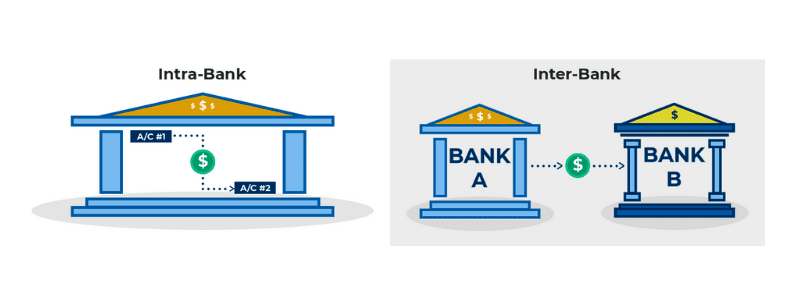
The amendment would pave the way for a liquidity platform enabling inter-SACCO transactions and overnight or short-term SACCO lending, a key step toward SACCOs joining the National Payments System.
Compounding the delay, a sessional paper for the cooperatives sector and a new Cooperatives Bill have also stalled, after the Senate and the National Assembly clashed over proposed amendments to the Cooperatives Bill 2024.
Despite the holdup, industry leaders remain optimistic that a new Cooperatives Act and amended SACCO Act are on the horizon.
“At the moment, we have a lot of goodwill in the sector, and what we need is more public participation, consultations between stakeholders and players, as well as harmony. Presently, what is being witnessed is a lot of misinformation from numerous disjointed forums, some disseminating information that is not well researched or factual,” said Joyce Ndegwa, CEO Mentor SACCO.
What Admission to the Payments System Would Unlock?
Gaining access to the National Payments System would let SACCOs grow their deposits, loan books and membership, and allow diaspora members to wire money directly into their SACCO accounts back home, currently only possible via a bank account.
Worldwide, credit unions can tap shared liquidity facilities that make borrowing and lending among themselves cheaper and more convenient. Kenyan SACCOs currently have no equivalent.
Access would also let FOSA-operating SACCOs issue and clear their own cheques and process personal cheques, and offer members trade finance, treasury management, electronic funds transfers (EFTs) and real-time gross settlements (RTGS), services SACCOs currently access only through commercial banks, at a fee.
Some deposit-taking SACCOs already have balance sheets larger than some mid- or low-tier banks, holding deposits worth billions of shillings. Yet they still rely on a clearing house controlled by the banks, losing out on the processing fees they pay banks to serve members on large transactions.
Industry executives say admission to the system would also let SACCOs introduce entirely new products and services. Many large SACCOs, they add, still have significant room to grow their membership.
“If SACCOs join the National Payments System, they will be able to grow their deposits, loans disbursed and membership. We still have headroom in bringing more members to join SACCOs. While this proposal has been in the works for years, things have really moved fast and are now at very advanced stages and nearing operationalisation, which will be sooner rather than later. Access to the National Payments System will also allow those in the diaspora to wire money directly to SACCOs here in Kenya,” said David Mategwa, National Chairman, Kenya National Police DT SACCO.
The Cost of Staying Locked Out
Without access to the payments system, many SACCO members have not fully engaged with the financial services and products their societies offer.
SACCOs cannot transact freely with each other or with parties outside the cooperative movement, forcing members through a process that is slow and costly. Diaspora members struggle to remit funds directly to their home SACCOs, and pensioners cannot receive their dues directly into SACCO accounts, both must first pass through a bank account.
Banks’ hold on the cheque-clearing system and credit market has similarly constrained SACCO business. To issue products such as personal cheques, SACCOs must ride on bank networks through third-party arrangements, raising costs for both the societies and their members.
Once admitted to the National Payments System, SACCOs would be able to issue cheques faster and more cheaply, and move money between members without routing through third parties. But none of this can happen until Parliament amends the SACCO Act.
This is not the first attempt to connect SACCOs to the national payments infrastructure. Former Cabinet Secretary for Cooperatives and MSME Development, Simon Chelugui, previously championed a similar push that ultimately stalled.
Under that plan, the National Treasury and the Ministry of Cooperatives, Micro, Small and Medium Enterprises (MSMEs) were to build a third-tier National Payments System for SACCOs, comprising a cheque-processing platform and a Central Finance Facility, at a cost of KSh 1 billion.
The idea was to bring all SACCOs into a single clearing house linked to a central finance facility, allowing them to issue and clear their own branded cheques and roll out new products such as LPO loans. Designed as a clearing house for smaller depositors at the lower end of the market, the platform was not intended to compete with the interbank market run by the Kenya Bankers Association on behalf of commercial banks.
Proponents say such a clearing house would bring Kenya’s SACCOs in line with credit unions in more developed markets such as the United States and Canada.