

By Morris Mwaringa
The waters of the Indian Ocean have long sustained coastal communities across Kenya, providing food, employment and income for thousands of families. Yet beneath the surface of this economic lifeline lies a growing threat that continues to undermine livelihoods and deplete marine resources: illegal, unreported and unregulated fishing.
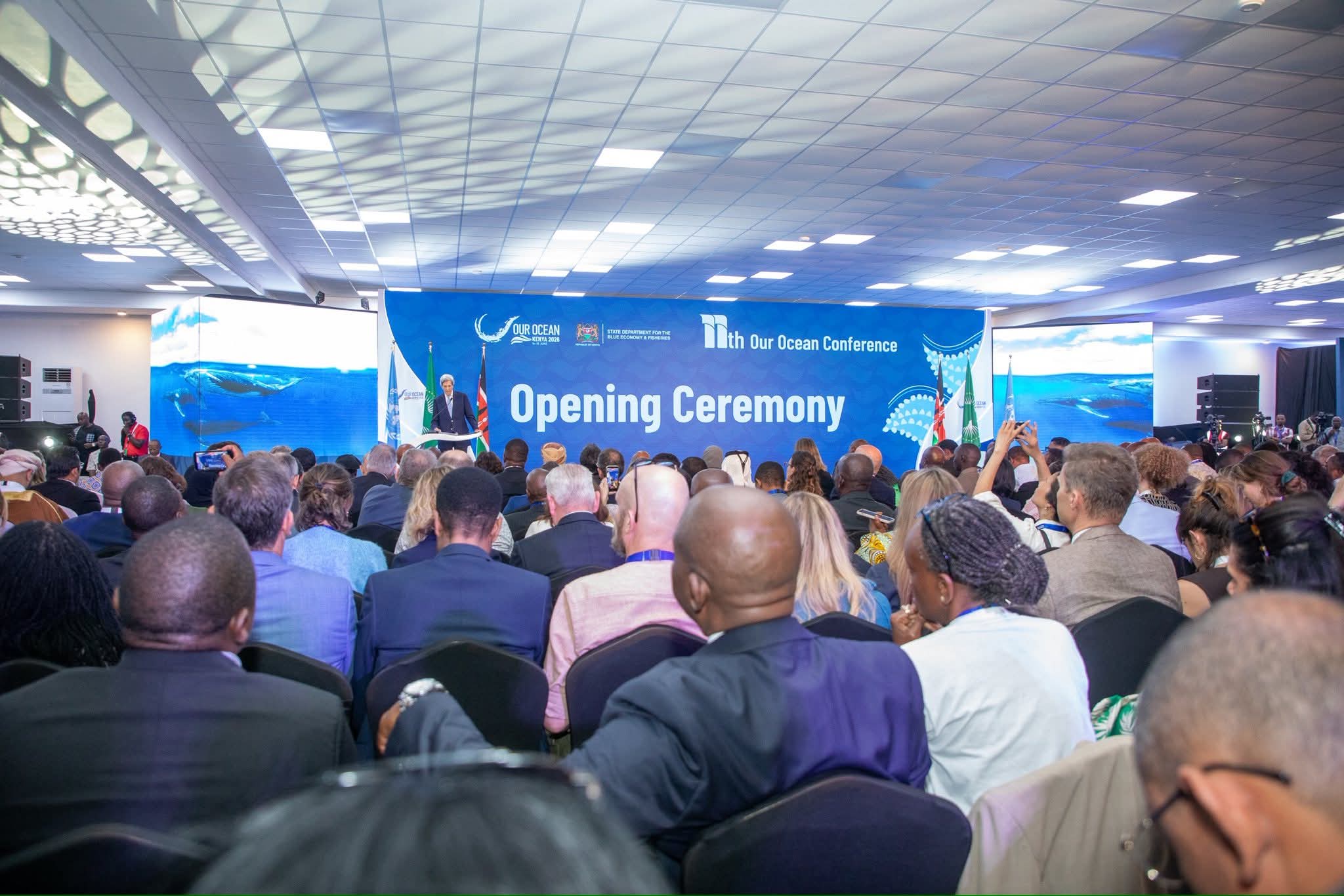
At the 11th Our Ocean Conference held in Mombasa, world leaders identified illegal fishing as one of the greatest challenges facing sustainable ocean management.
President William Ruto called on international partners to stand with Kenya in combating the practice, warning that unchecked exploitation of marine resources threatens both biodiversity and economic development.
For small-scale fishers, illegal fishing is more than an environmental issue. It is a direct assault on their livelihoods.
Many artisanal fishers venture into the ocean daily only to return with shrinking catches. While climate change and rising sea temperatures contribute to declining fish stocks, illegal fishing activities by unauthorized operators further worsen the situation by harvesting resources without regard for sustainability.
The consequences ripple through entire coastal economies. Reduced fish catches mean lower incomes for fishermen, fish traders, transporters, processors and vendors who depend on the fisheries value chain. Women involved in fish processing and marketing are often among the hardest hit.
Marine conservation experts argue that effective enforcement, stronger monitoring systems, and international cooperation are essential to reversing the trend. Because fish stocks move across national boundaries, illegal fishing cannot be addressed by one country alone.
Conference delegates also highlighted the importance of community participation in conservation efforts. Beach Management Units, fisheries co-operatives and local conservation groups can play a vital role in reporting illegal activities and promoting sustainable fishing practices.
Deputy President Kithure Kindiki noted that Kenya is investing in broader ocean protection measures, including mangrove restoration, marine clean-up initiatives and stronger governance frameworks.
Healthy marine ecosystems are not only important for biodiversity but also for economic resilience. Mangrove forests, for instance, serve as breeding grounds for fish while protecting coastlines from erosion and storm surges.
Former U.S. Secretary of State John Kerry urged delegates to move beyond commitments and focus on implementation, emphasizing that ocean protection must become a central pillar of global climate action.
The success of these efforts will ultimately be measured not by the number of declarations signed but by their impact on communities whose lives depend on the sea.
For Kenya’s coastal residents, protecting the ocean is not simply about preserving nature. It is about safeguarding jobs, securing food supplies and ensuring that future generations can continue to earn a living from the rich but vulnerable resources of the Indian Ocean.